Catalogue
First English editions of pre-modern Japanese craft-trade primary sources, drawn from the technical and trade literature of the period 1860–1945. The catalogue is curated to address the documented gap in the English-language secondary literature where post-war scholarship has had to lean on synthesis even where the primary documentation is both extant and authoritative.
Acquisition enquiries: masae@tokyo-shelf.com.
Shōyu and miso
Saishin Shōyu Jōzō-ron (1913)
The foundational pre-war Japanese shōyu brewing monograph. 469 pages on koji culture preparation, moromi management, brine ratios, raw-material chemistry, and the operational practice of the working brewer at the moment the modern Japanese shōyu industry was consolidating its standards.
- Toganō Meijirō [栂野明二郎]. Saishin Shōyu Jōzō-ron [最新醤油醸造論]. Tokyo: Ōtani Shōten, 1913. 469 pp. + 64 pp. index.
- NDL: PID 949364, DOI 10.11501/949364. Index volume: PID 949365.
- Access status: Public Domain Mark (verified, Japanese copyright law).
- Author dates: Toganō Meijirō (1882–1940).
- English edition: Tokyo Shelf, 2026 (in active preparation). ISBN: forthcoming.
Saishin Shōyu Jōzō Shinan (1934)
Toganō Meijirō’s mid-Shōwa successor to his 1913 monograph: the canonical Japanese industrial guide to shōyu brewing of the period, by the same author whose 1913 Saishin Shōyu Jōzō-ron is the most-cited pre-war shōyu reference work. Updated operating-detail on koji culture preparation, moromi management, brine ratios and aging from a working brewer’s perspective at the moment the modern Japanese shōyu industry was consolidating its standards.
- Toganō Meijirō. Saishin Shōyu Jōzō Shinan [最新醤油醸造指南]. 1934.
- English edition: Tokyo Shelf, in active preparation. Full bibliographic record on request.
Shōyu Brewer: Latest Theory and Practice Research (1923)
Ashida 1923 — pre-war shōyu trade research compendium written for the working brewer.
- Ashida. 1923.
- English edition: Tokyo Shelf, in active preparation. Full bibliographic record on request.
Sake-koji and sake brewing
Shuzō Seikiku-hō (1928)
Watarai’s canonical sake koji-making manual, covering the seed-koji rotation, the cooling and aeration of the kōji-muro, and the operational discipline of the small kura at the moment the modern sake industry was consolidating its standards.
- Watarai. Shuzō Seikiku-hō [酒造正規法]. 1928.
- English edition: Tokyo Shelf, in active preparation. Full bibliographic record on request.
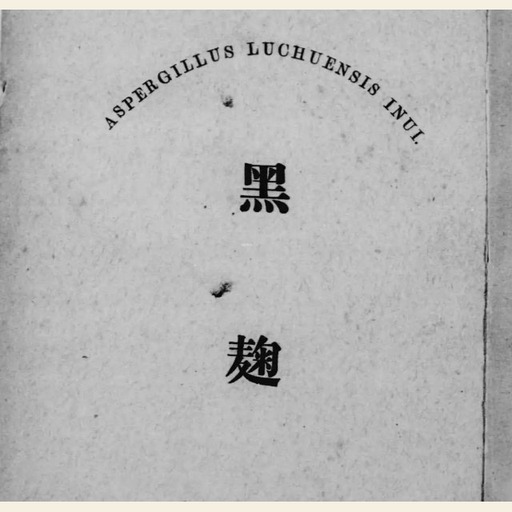
Kuro-Kōji (1919)
Kawauchi Genichiro’s personal field notebook on black koji (Aspergillus luchuensis Inui) and shōchū distillation. 48 pages. Original printed at request of Director Inoue Fukujiro, based on years of Kawauchi’s personal research while a Technical Officer at the Kagoshima Tax Office (Tax Supervision Bureau).
- Kawauchi Genichiro [河内源一郎]. Kuro-Kōji [黒麹] (inner title: ASPERGILLUS LUCHUENSIS INUI 黒麹). Kagoshima: Kagoshima Prefecture Sake Brewers Cooperative Federation, 1919. 48 pp.
- NDL: PID 957987, DOI 10.11501/957987.
- Access status: Public Domain Mark (verified, Japanese copyright law).
- Author dates: Kawauchi Genichiro (1883–1948).
- English edition: Tokyo Shelf, 2026 (in active preparation). ISBN: forthcoming.
Shōchū, awamori, and beverage spirits
Shōchū, Shusei oyobi Shusei Gan’yū Inryō (1922, seven volumes)
Kawauchi’s seven-volume treatise on shōchū, ethanol-purification, and ethanol-bearing beverage production. The canonical pre-war Japanese reference on the koji- and yeast-side chemistry of distilled and fortified beverages.
- Kawauchi. Shōchū, Shusei oyobi Shusei Gan’yū Inryō [焼酎・酒精及び酒精含有飲料]. 1922.
- English edition: Tokyo Shelf, in active preparation. Full bibliographic record on request.
Awamori Zakkō (1937)
Higashionna’s miscellaneous study of the Okinawan awamori tradition: cultivation, distillation, ageing, and the cultural-economic position of the awamori kura in pre-war Ryūkyū.
- Higashionna. Awamori Zakkō [泡盛雑考]. 1937.
- English edition: Tokyo Shelf, in active preparation. Full bibliographic record on request.
Awamori Monogatari (1951)
Sato’s post-war reflection on awamori production, including pre-war operational practice retrospectively documented.
- Sato. Awamori Monogatari [泡盛物語]. 1951.
- English edition: Tokyo Shelf, in active preparation. Full bibliographic record on request.
Shusei oyobi Shōchū (1948)
Kurono’s post-war integration of ethanol production and shōchū distillation theory.
- Kurono. Shusei oyobi Shōchū [酒精及び焼酎]. 1948.
- English edition: Tokyo Shelf, in active preparation. Full bibliographic record on request.
Vinegar and other fermented condiments
Shokuzu Jōzō-hō (1942)
Nagaki Gyōzaburō’s methods-of-vinegar-brewing monograph, drawing on the Nankai Shōji vinegar tradition. Covers acetic-acid bacteria classification, enzyme management, and the operational practice of the working vinegar brewer in pre-war Japan.
- Nagaki Gyōzaburō. Shokuzu Jōzō-hō [食酢醸造法]. 1942.
- English edition: Tokyo Shelf, in active preparation. Full bibliographic record on request.
Beer, whisky, and Western beverages
Bīru, Wisukī (1951)
Matsuyama’s post-war monograph on beer and whisky production, with reference to pre-war Japanese craft-brewing practice that would later become the foundation of the international Japanese whisky tradition.
- Matsuyama. Bīru, Wisukī [ビール、ウィスキー]. 1951.
- English edition: Tokyo Shelf, in active preparation. Full bibliographic record on request.
Cuisine and food trades
Mezurashii Osushi no Koshiraekata (1925)
Hattori’s pre-war sushi craft monograph documenting the Edo-style sushi tradition at the moment the modern Tokyo-and-Osaka sushi-bar form was crystallising. Includes 24 base condiments, 27 decorative arrangements, 23 bara-style and 22 hako-style technique entries, with approximately 200 sushi configurations in total.
- Hattori. Mezurashii Osushi no Koshiraekata [珍らしいお鮓の拵え方]. 1925.
- English edition: Tokyo Shelf, in active preparation. Full bibliographic record on request.
Menrui no Seihō (1950)
Sakaki’s post-war noodle-making methods monograph, drawing on pre-war ramen and udon production literature.
- Sakaki. Menrui no Seihō [麺類の製法]. 1950. NDL PID 2530053.
- English edition: Tokyo Shelf, in active preparation. Full bibliographic record on request.
Cha Ryōri (1935)
The 1935 monograph on tea-cookery (cha-ryōri) in the Japanese culinary tradition.
- Cha Ryōri [茶料理]. 1935.
- English edition: Tokyo Shelf, in active preparation. Full bibliographic record on request.
Tea cultivation and industry
Uji-cha no Chōsa (1940)
The 92-page Kyoto Chamber of Commerce and Industry survey of the Uji tea industry, completed at the moment Japan’s tea-export market had contracted under the wartime exchange-rate regime and the Uji houses were consolidating around the premium tea category. Includes prefecture-by-prefecture domestic production figures (1912–1939), the lineage and eight distinctive characteristics of Uji tea, micro-village production data for Uji-gun, Kuse-gun, Tsuzuki-gun and Sōraku-gun, and the machinery profile of the consolidating producer cooperatives.
- Kyoto Chamber of Commerce and Industry [京都商工會議所]. Uji-cha no Chōsa [宇治茶の調査]. Volume 3 of the Kyōto Sangyō Sōsho [京都産業叢書]. Kyoto, 1940. 92 pp.
- English edition: Tokyo Shelf, 2026 (in active preparation). Full bibliographic record on request.
Acquisition
Acquisition enquiries: masae@tokyo-shelf.com.