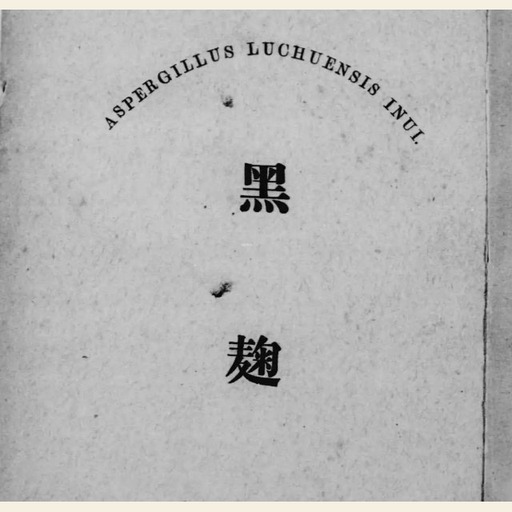
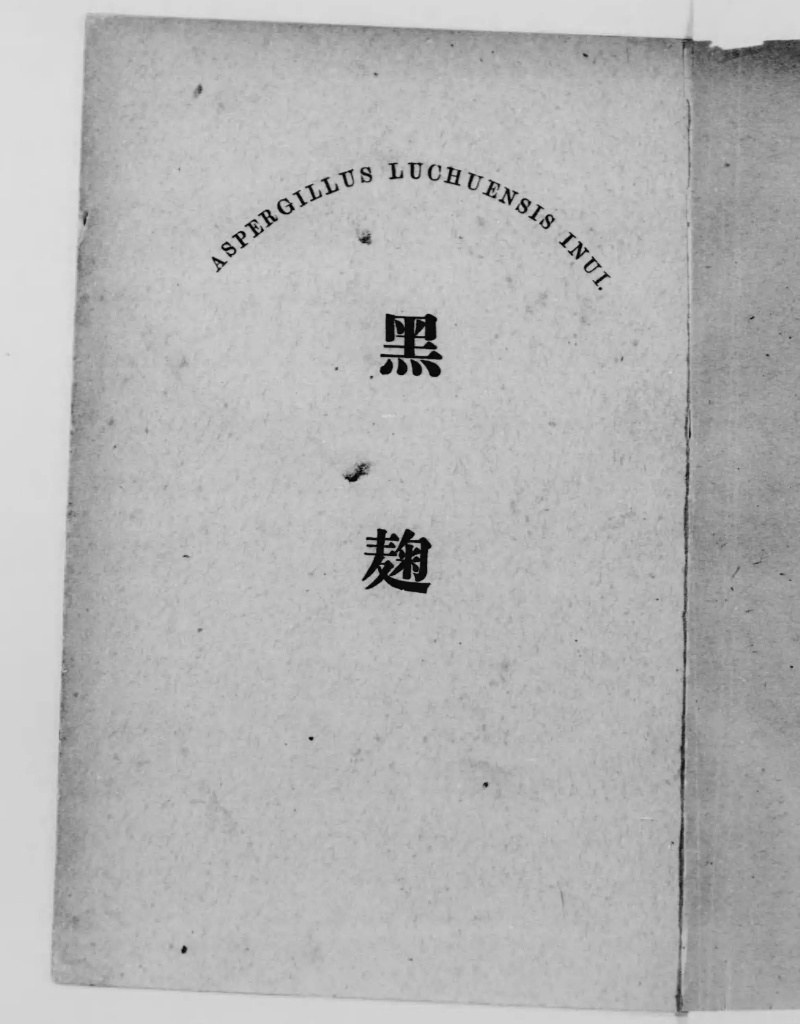
Black Koji (1919) — Kawauchi Genichiro's field notebook
Five-page sample from the forthcoming first English edition of Aspergillus luchuensis Inui · Kuro-Kōji.
May 30, 2026
This is a 5-page sample from the forthcoming first English edition of Kuro-Kōji (1919) by Kawauchi Genichiro — the personal field notebook of the figure who isolated Aspergillus luchuensis Inui from Okinawan awamori and founded the lineage of modern Japanese black-koji distillation. A 48-page booklet, privately printed in Kagoshima for the prefectural brewers’ cooperative, and never previously translated into English.
The full edition includes all sixteen chapters, modern annotations on the mycology and brewing chemistry, and a glossary of pre-modern Japanese brewing terms. Write to commission a copy.
Cover (Page 1)
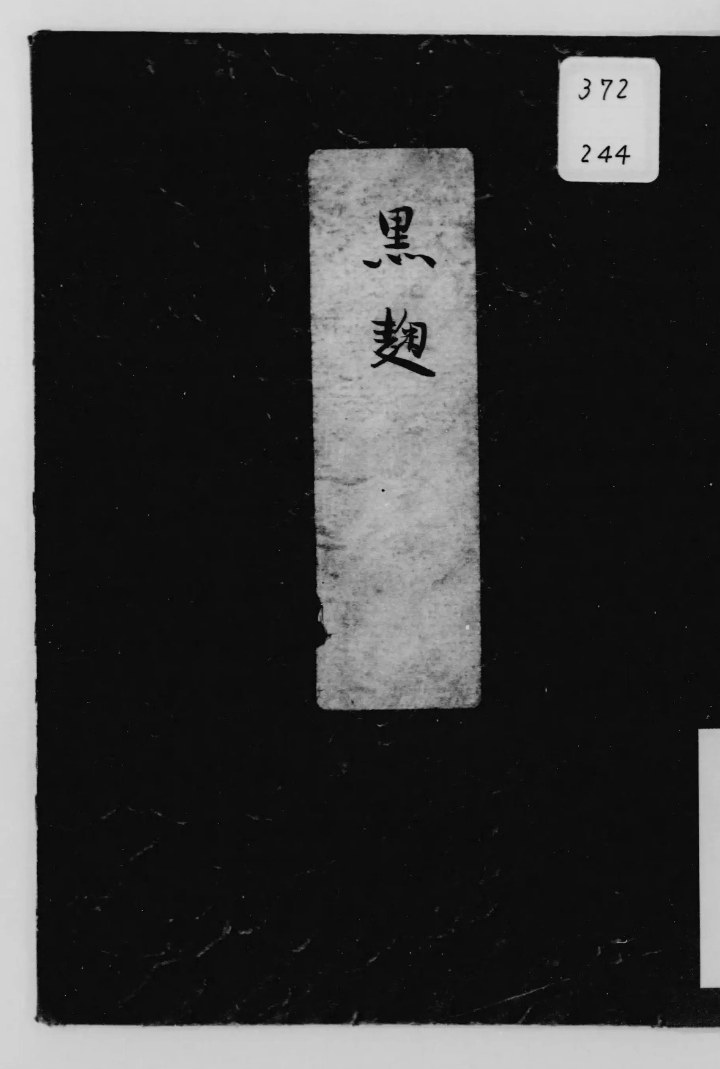
黒麹 — Kuro-Kōji
Inner Title (Page 3)
ASPERGILLUS LUCHUENSIS INUI 黒麹 — Kuro-Kōji
The Latin binomial appears as set by Inui (the senior collaborator at the Tax Supervision Bureau who first formally described the species).
Foreword (Page 5) — selected passages
From the Western Finance Research Association, Kagoshima Branch:
The fermentation processes used in the production of alcoholic beverages from sweet-potato remain little studied by scientists. Methods of brewing in regional industries have spread broadly across the country, but the matter of “Awamori koji” and its enzymatic and acid-producing properties has not yet been fully investigated. The present booklet has been compiled here as preliminary reference material from the unpublished manuscripts of Technical Officer Kawauchi Genichiro of the Tax Office; the contents are necessarily fragmentary and not yet a finished work.
From the Kagoshima Prefecture Sake Brewers Cooperative Federation:
This booklet records the principal findings of several years of independent research by Technical Officer Kawauchi Genichiro of the Tax Supervision Bureau, conducted alongside his official duties at the Kagoshima Tax Office. Up to the present day, almost nothing has been written on the matter of shōchū brewing. At the request of Director Inoue Fukujirō, the booklet is now printed and circulated. We extend our sincere thanks to Director Inoue and to Kawauchi.
Table of Contents (Pages 6–7) — Chapters 7–16
| Ch. | Title (Translated) | Original |
|---|---|---|
| 7 | Production of sake-grade shōchū, and sweet-potato shōchū made with rice bran | 酒精式焼酎及未糠使用甘藷焼酎製造法 |
| 8 | Product Quality | 製品品質 |
| 8 §1 | Comparison of shōchū made with black koji vs. yellow koji | 黑麹ト黄麹トニヨル燒酎品質ノ比較 |
| 8 §2 | Variant brewing methods | 變形仕込方法 |
| 9 | Microscope investigation of awamori koji types and morphological variants | 泡盛麹菌ノ種類及其ノ變形ニ關スル顯鏡調査 |
| 9 §1 | Types of awamori koji | 泡盛麹菌ノ種類 |
| 9 §2 | Morphology | 形態 |
| 9 §3 | Two or three experiments on spore color and growth color | 芽胞子色及發育色ニ二三ノ實驗 |
| 9 §4 | Variant forms of awamori koji (gray koji) | 泡盛麹菌ノ變態(灰色麹菌) |
| 10 | Investigation of diastase and acid-producing activity in awamori koji | 泡盛麹菌「ヂアスターゼ」及生酸性ニ關スル調査 |
| 12 | Awamori brewing yeasts | 泡盛醸酵母 |
| 13 | Shōchū fermentation (sweet substances, Fehling reducible substances, oily substances) | 燒酎醸酵 |
| 14 | Oils (fusel oil) and resins in shōchū, and Fehling reducible substances | 燒酎中ノ油・澤・フェーリング還元物質 |
| 15 | On the cough-inducing substances contained in awamori koji | 泡盛麹中ニ含有スル咳嗽ヲ催スベキ物質 |
| 16 | General overview of alcohol yields from various raw materials | 各種ノ原料ヨリ化成スル諸種ノ酒精量ノ概念 |
Chapter 2 — Raw Materials (Page 9) — opening
The principal raw materials presently used for awamori brewing are: Karakofu rice, mainland rice, foxtail millet (kibi), and similar grains. These materials each differ in composition, and the various brewing methods developed for each are likewise different.
Today the principal constituents of one hundred parts (by weight) of each of the chief raw materials, as analyzed by the present author, are approximately as shown in the following table.
| Raw material | Moisture | Starch | Fat | Minerals |
|---|---|---|---|---|
| Hyūga white rice | 13.900 | 73.660 | 2.868 | 1.000 |
| Karakofu rice, 5th-grade | 13.853 | 75.860 | 2.840 | 1.341 |
| Foxtail millet (Kobayashi, milled) | 13.957 | 66.500 | 4.547 | 1.831 |
(Three rows shown; the table continues for the remaining raw materials.)
The reader will note that fat content in millet, in particular, is consistently far higher than in the other materials, and the mineral content likewise high. In producing shōchū, the alcohol yield from the former (rice) is significantly higher than from the latter (millet), so that—as with the other products—the matter of quality demands that the alcohol yield be carefully measured.
Chapter 3 — Koji Making and Seed Koji (Page 9, continued)
In the koji-cultivation rooms in general use across Okinawa Prefecture today, the rooms are of considerable size: typically six ken in length, three ken in width, and about one ken and a half in height; the entire room is fitted with four-mat-square shelving made of small bamboo, with seven boards stacked, on which the koji is laid out for cultivation. The upper part is sealed with two-inch-thick straw matting, made of woven straw rope arranged in the manner of large straw bags.
(Continues into the detailed cultivation procedure, temperature management, and seed-koji propagation methods in subsequent pages.)
End of sample (5 pages of 48 total)
The full English edition will include
- Full translation of all sixteen chapters
- Modern annotations on the mycology (A. luchuensis, A. awamori, A. niger relationships), brewing chemistry, and historical brewing equipment
- Glossary of pre-modern Japanese brewing units with metric conversions
- Concordance of brewers’-era ingredient names to modern taxonomy
Delivered as HTML, PDF, and Markdown.
To commission
Write to masae@tokyo-shelf.com with a brief note on your intended use. I’ll respond with delivery details and timeline.
— Masae Sato
Original: Kuro-Kōji (黒麹) — Aspergillus luchuensis Inui, by Kawauchi Genichiro (1883–1948), Technical Officer, Kagoshima Tax Office. Published 1919 (Taishō 8) by the Kagoshima Prefecture Sake Brewers Cooperative Federation. 48 pages.